Why CAVA Stock Has Captured Investors’ Attention
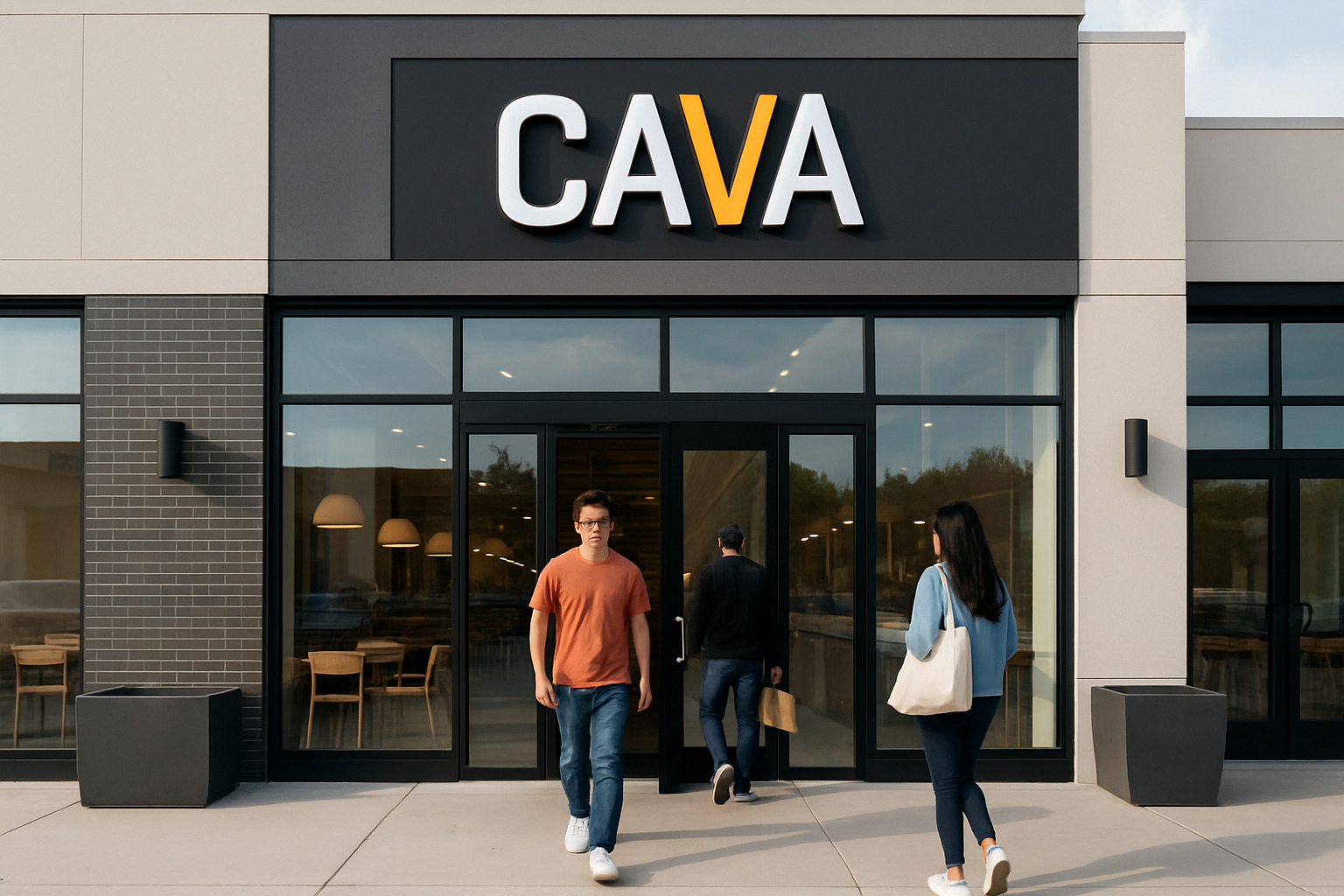
CAVA stock has become one of the most talked-about growth stories in the restaurant sector since its 2023 IPO. This Mediterranean fast-casual chain has delivered remarkable returns, with shares gaining over 148% in the past year despite recent volatility.
Quick CAVA Stock Facts:
- Current Price Range: $92-$98 (as of recent trading)
- 52-Week Range: $29.05 – $172.43
- Market Cap: ~$10.5 billion
- Revenue Growth: 28% year-over-year
- Restaurant Count: 352 locations across 25 states
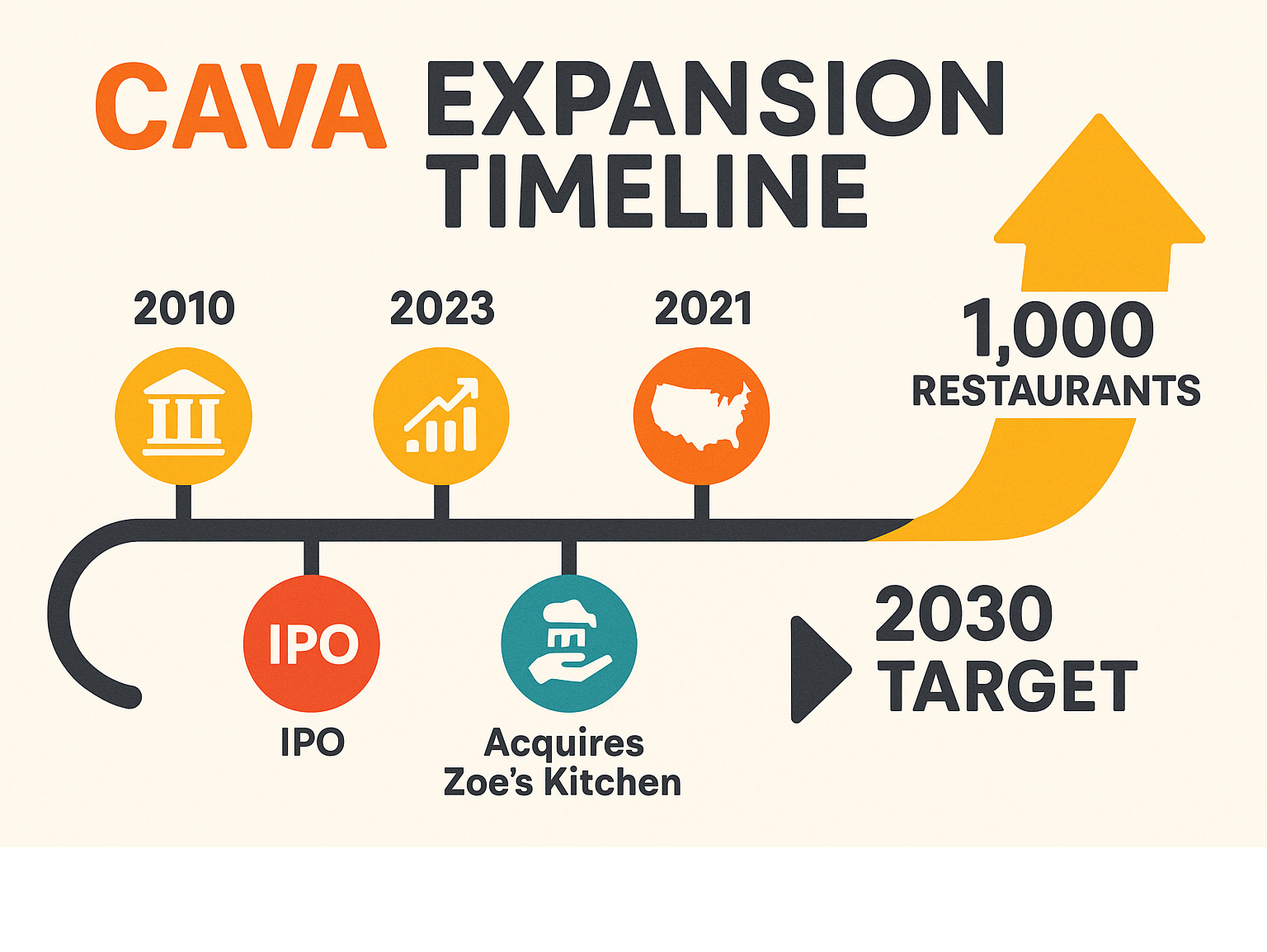
- 2030 Target: 1,000+ restaurants
CAVA operates fast-casual Mediterranean restaurants focused on healthy, customizable bowls and plates. The company went public in June 2023 at $22 per share and has experienced significant price swings as investors debate its growth potential versus high valuation.
The stock trades at premium multiples – with a P/E ratio over 200 – reflecting high expectations for continued expansion. Bulls point to strong same-store sales growth, healthy unit economics, and the untapped potential of Mediterranean cuisine. Bears worry about the lofty valuation and whether the company can sustain its rapid growth pace.
For young professionals considering CAVA stock, understanding both the opportunity and risks is crucial. The company’s expansion story shows promise, but success is far from guaranteed in the competitive restaurant space.
Key terms for cava stock:
Why This Guide Matters
In today’s volatile market environment, retail investors need comprehensive analysis to make informed decisions about growth stocks like CAVA. We’ve seen dramatic swings in restaurant stocks as consumer spending patterns shift and inflation concerns persist. Understanding CAVA stock‘s fundamentals, growth trajectory, and risk factors is essential for anyone considering adding this high-growth name to their portfolio.
Our analysis at Finances 4You focuses on helping you align investment decisions with your financial goals and age-appropriate risk tolerance. Whether you’re building wealth in your 20s or 30s, CAVA represents both significant opportunity and considerable risk that demands careful evaluation.
What Is CAVA Group, Inc.?
CAVA stock represents ownership in a Mediterranean-focused restaurant company that’s riding the wave of America’s healthy eating revolution. Think of it as the Mediterranean answer to fast-casual dining – but with hummus, falafel, and grilled lamb instead of traditional offerings.
Founded in 2010 by CEO Brett Schulman and his partners (who brought authentic Greek heritage to the table), CAVA has built something special in the crowded fast-casual space. The company’s restaurants let you build your own Mediterranean bowls and plates, mixing and matching ingredients like grilled chicken, lamb meatballs, falafel, and an array of colorful vegetables – all served over rice, greens, or warm pita.
What makes CAVA interesting isn’t just the food – it’s how they’ve grown. The real game-changer came in 2018 when they acquired Zoe’s Kitchen for roughly $300 million. This wasn’t just about buying more restaurants; it was about buying a faster, cheaper way to expand.
Here’s where it gets smart: Instead of building every new location from scratch (which costs about $1.2-$1.3 million), CAVA converts existing Zoe’s locations for just $600,000-$700,000. Even better, these converted locations typically see their sales jump from $1.4 million to $2 million annually. That’s the kind of math that gets investors excited about CAVA stock.
Today, the company operates 352 restaurants across 25 states, with its strongest presence in the Mid-Atlantic region where it all started.
Business Model & Segments
CAVA keeps things relatively simple with two main ways to make money – and both are working well.
The restaurant business is the star of the show, generating most of the company’s revenue through company-owned locations. The numbers here are impressive: each restaurant averages $2.8 million in annual sales with restaurant-level profit margins of 25.6%. These margins rival industry leaders, which is no small feat.
The consumer packaged goods (CPG) segment might be smaller, but it’s clever. CAVA sells their signature dips, spreads, and sauces in grocery stores nationwide. You’ve probably seen their products in the hummus section without realizing it.
This grocery strategy does double duty. First, it brings in additional revenue. Second, it introduces new customers to CAVA’s flavors before they ever step foot in a restaurant. It’s like a delicious form of advertising that actually pays for itself.
Expansion Blueprint to 2030
Here’s where CAVA stock gets really interesting for growth investors. The company has set an ambitious target: 1,000 restaurants by 2030. That’s nearly tripling their current size in just six years.
The expansion strategy focuses on high-growth markets where Mediterranean food is still relatively new. Recent success in places like Chicago and throughout the Midwest shows that CAVA’s concept travels well beyond its East Coast roots.
Management is taking a measured approach, planning to open 54-57 new locations in fiscal 2024. They’re not just throwing restaurants everywhere – they’re targeting markets with the right demographics: health-conscious consumers who appreciate quality ingredients and are willing to pay for them.
For investors looking to understand how restaurant expansion fits into broader investment strategies, CAVA’s methodical approach offers a compelling example of how to scale a concept while maintaining quality and profitability.
CAVA Stock Today: Price & Performance Snapshot

If you follow CAVA stock, you know it can move fast. Shares recently changed hands in the $9298 range, giving the company a market capitalization near $10.5 billion and leaving the stock up roughly 148 % since its June 2023 IPO.
Key trading stats at a glance:
- 52-week range: $29.05 72.43
- Average daily volume: ~3.6 million shares
- Beta vs. S&P 500: 1.86 (higher volatility)
- Short interest: ~9 % of float
From IPO to Now
CAVA priced its IPO at $22 and immediately doubled on day one. Enthusiasm briefly lifted the stock to $172 in late-2024, but reality (and valuation worries) brought it back to todays level. The ride shows how quickly sentiment can swing when a young company trades at premium multiples.
Why the Wide Swings?
- Earnings days – strong same-store sales lifts the price, any slowdown does the opposite.
- Analyst revisions– new price targets or rating changes are quickly reflected in the quote.
- Macro mood -with a beta near 2, the stock often exaggerates broad market moves.
Investors can track upcoming events through the companys own site, CAVA Investor Relations, to keep surprises to a minimum.
For anyone considering an entry point, CAVA stock tends to trade on expectations as much as on current results, so price volatility is part of the package.
Financial Deep Dive & Valuation Metrics
When you open the books on CAVA stock, you find a fast-growing restaurant chain with impressive numbers and a valuation that already prices in years of flawless execution.
- Q1 2024 revenue: $259 million (+27 % YoY)
- Net income: $14 million (up 750 % YoY)
- EPS: $0.13, ahead of consensus
- Restaurant-level margin: 25.6 %
- Cash & short-term investments: $329 million
Valuation Snapshot
Metric | Current Multiple
—|P/E (ttm) | ~229×
Price/Sales (ttm) | ~15×
EV/EBITDA (fwd) | ~80×
These figures sit well above the broader restaurant peer group, a reminder that the market is paying up for perceived long-term dominance in Mediterranean fast-casual dining.
Income Statement Trends
Revenue growth comes from both new units and double-digit same-store sales. Because fixed costs are largely in place after year one, incremental sales flow generously to profit, explaining the sharp jump in net income.
Balance-Sheet Strength vs. Growth Needs
The companys liquidity gives it freedom to fund 50+ builds per year without heavy borrowing, though aggressive expansion still drove slightly negative free cash flow last quarter. Management signals that near-term cash burn is acceptable as long as new restaurants keep hitting the current $2.8 million AUV benchmark.
The Takeaway
CAVAs financials justify optimism, but its multiples demand near-perfect execution. Anyone buying CAVA stock needs conviction that margins and growth rates can remain unusually strong for many more years.
Catalysts & Risks Impacting CAVA Stock
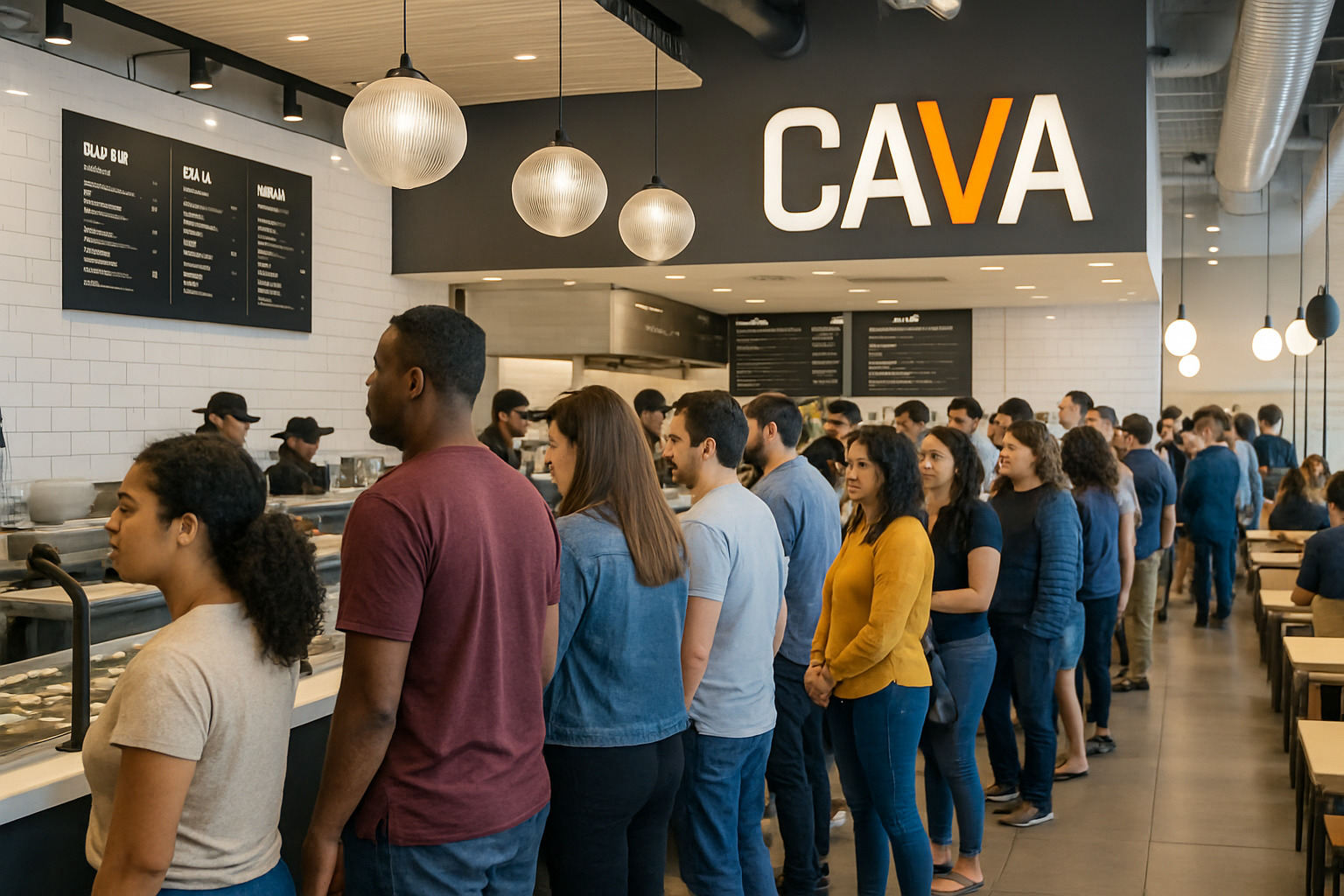
Investing in CAVA stock means weighing powerful tailwinds against very real execution challenges.
Growth Drivers
- Restaurant expansion: Goal of 1,000 units by 2030.
- Untapped cuisine category: Mediterranean remains far less crowded than other fast-casual formats.
- Digital & loyalty push: Early tests show higher order frequency once guests enroll.
- Menu innovation: Items like grilled steak widen appeal while keeping health halo.
Key Risks
- Premium valuation: At >200× earnings, even a small stumble can hit the share price hard.
- Scaling quality: Rapidly tripling the footprint could dilute brand and service standards.
- Consumer-spending pressure: A higher-priced check average makes traffic sensitive to economic slowdowns.
- Food-cost inflation: Fresh produce and proteins leave margins exposed to commodity swings.
Buy, Hold, or Pass?
The bull case argues that CAVA can become the category-defining Mediterranean brand with best-in-class economics. The bear case simply points to valuation risk. In practice, position sizing is key many investors treat CAVA stock as a small, high-beta satellite holding rather than a portfolio core.
Analyst Outlook & Investor Considerations
Wall Street likes the company but argues about the price. Among the major firms that publish on CAVA stock:
- 8 rate it Buy/Overweight
- 7 say Hold
- 1 says Sell
The current average target is about $142, with individual estimates spanning roughly $90–$195. Such a wide band shows how sensitive the valuation is to growth-rate assumptions.
Where the Debate Centers
- Same-store sales durability – Can double-digit comps persist as the concept matures?
- Margin preservation – Will 25 %+ restaurant-level profitability survive inflation and labor tightness?
- Execution at scale – Can management repeat recent successes as they push beyond 50 new openings per year?
Metrics to Watch Each Quarter
- Comps & traffic mix (not just price).
- New-unit AUVs outside the Mid-Atlantic.
- Restaurant-level margins versus build-out costs.
- Digital sales percentage once the loyalty program goes nationwide.
For long-term investors, the message is clear: keep an eye on those operating KPIs and be ready for volatility as the market reassesses them every three months. CAVA stock will likely remain a “prove-it” story for the foreseeable future.
Frequently Asked Questions about CAVA Stock
Investors often have specific questions about CAVA stock that go beyond the basic financial metrics. Let’s address the most common concerns that come up when evaluating this high-growth restaurant investment.
Does CAVA pay a dividend?
No, CAVA stock doesn’t pay a dividend, and the company hasn’t announced any plans to start one anytime soon. This shouldn’t come as a surprise – it’s actually pretty standard for fast-growing restaurant companies that are still in expansion mode.
Think about it this way: CAVA is targeting 1,000 restaurants by 2030, which means they need every dollar they can get to fund new locations, upgrade technology, and enter new markets. Paying dividends would essentially mean taking money away from these growth investments.
For investors focused on building wealth through capital appreciation rather than current income, this approach makes perfect sense. The company’s management believes they can generate better returns by reinvesting profits into expansion rather than distributing cash to shareholders.
If you’re looking for income-generating investments, CAVA might not be the right fit for your portfolio right now. But if you’re comfortable with a growth-focused approach, the lack of dividends shouldn’t be a dealbreaker.
What is the short interest telling us?
The short interest in CAVA stock sits at around 9.14% of the public float, which tells us that a meaningful number of investors are betting against the stock. This isn’t necessarily alarming, but it does reveal some important market sentiment.
This level of short interest reflects several concerns that skeptical investors have about CAVA. The premium valuation with a P/E ratio over 200 makes some investors nervous about whether the stock can live up to its high expectations. Others question whether the company can maintain its impressive growth rates as it gets larger and faces more competition.
The short interest can actually create some interesting trading dynamics. When CAVA reports strong earnings or positive news, short sellers sometimes rush to cover their positions, which can push the stock price up even more dramatically. On the flip side, any disappointing news can get amplified as more investors join the short side.
For long-term investors, the short interest is just one data point to consider. It shows there’s healthy skepticism in the market, which can actually be a good thing if you believe in the company’s long-term prospects.
How big can CAVA get by 2030?
CAVA’s ambitious goal of reaching 1,000 restaurants by 2030 would represent nearly tripling their current footprint of 352 locations. This might sound aggressive, but there are solid reasons to believe it’s achievable.
The Mediterranean fast-casual market remains surprisingly underserved compared to other cuisines. While Mexican-inspired chains like Chipotle have thousands of locations, Mediterranean concepts have barely scratched the surface of their potential market. This gives CAVA a significant runway for growth.
The company’s unit economics support this expansion vision. With average unit volumes of $2.8 million per restaurant and restaurant-level margins of 25.6%, each new location has the potential to be highly profitable. The successful expansion into markets like Chicago proves the concept works beyond its original Mid-Atlantic stronghold.
If CAVA hits their 1,000-unit target while maintaining current performance levels, they could potentially generate $2.8 billion in annual revenue or more. That would put them in the same league as some of the biggest names in fast-casual dining.
Of course, scaling from 352 to 1,000 locations brings challenges. The company will need to maintain food quality, train thousands of employees, and keep their brand consistent across diverse markets. Restaurant history is full of concepts that struggled during rapid expansion phases.
But with their strong balance sheet, proven business model, and experienced management team, CAVA appears well-positioned to execute on this ambitious growth plan. For investors willing to bet on successful execution, the 2030 target represents significant upside potential for CAVA stock.
Conclusion
CAVA stock tells a fascinating story that perfectly captures the excitement and anxiety of investing in high-growth restaurant concepts. After digging deep into the numbers, analyst opinions, and market dynamics, we’ve uncovered a company that’s firing on most cylinders but comes with a price tag that makes even seasoned investors pause.
The facts speak for themselves: CAVA has built something special with restaurant-level margins of 25.6% and average unit volumes of $2.8 million. These aren’t just impressive numbers – they’re the kind of metrics that separate successful concepts from the countless restaurant chains that flame out after initial promise.
But here’s where it gets interesting for young professionals building wealth. CAVA stock embodies both the potential rewards and real risks of growth investing. The company’s ambitious plan to reach 1,000 restaurants by 2030 could create substantial shareholder value if executed properly. Yet trading at 15 times sales and over 200 times earnings, the stock has priced in a level of perfection that rarely exists in the real world.
At Finances 4You, we’ve seen too many investors get swept up in growth stories without considering how individual positions fit their overall wealth-building strategy. CAVA might make sense as a small position within a diversified portfolio, especially if you’re in your 20s or 30s with time to ride out the inevitable volatility. But it should never dominate your investment approach.
The Mediterranean fast-casual opportunity remains largely untapped, giving CAVA a genuine competitive advantage in a crowded restaurant landscape. Consumer trends toward healthier eating aren’t going anywhere, and the company’s proven ability to expand successfully into new markets like Chicago validates the broader appeal of their concept.
What should you watch going forward? Same-store sales growth rates will tell you whether CAVA can sustain its momentum. New unit performance will reveal if the concept truly scales. And margin trends will show whether the company can maintain profitability while growing rapidly.
Successful investing aligns with your age and financial goals. If you’re curious about how growth stocks like CAVA fit into long-term wealth building, our guide on the best way to invest for retirement provides valuable context for balancing growth opportunities with prudent risk management.
The bottom line? CAVA stock represents a compelling growth story with real substance behind the hype. But like any high-valuation growth stock, it demands careful position sizing, realistic expectations, and the emotional discipline to handle significant price swings. Whether it belongs in your portfolio depends entirely on your individual circumstances and how well you can sleep at night knowing you own a stock that might swing 20% in either direction on any given earnings report.
Building wealth is a marathon, not a sprint. CAVA’s story is still being written, and while the early chapters look promising, the ending remains far from certain.